
How to Encourage Your Child to Wear Their Glasses?
Updated AUG 16, 2026 • 5 min read

| Quick Answer: Most children who refuse glasses aren’t objecting to the glasses themselves – they’re reacting to discomfort, fit, or confidence issues. The first thing to check is the frame fit. . Beyond that, the most effective strategies vary by age: consistent routine and distraction for toddlers; positive reinforcement and involvement in the frame choice for school-age children; greater autonomy and honest conversation for teens. |
Why You Can Trust This Guide?
Written with input from a board-certified ophthalmologist. Strategies are organized by age group, because what works for a toddler and what works for a twelve-year-old are genuinely different things.
Introduction
In most cases, children don’t refuse glasses because they ‘don’t like them’ – they stop wearing them because something about the experience doesn’t work. This guide covers what to check first, and what actually works by age.
If you’re still in the frame selection phase, our complete parent’s guide to children’s glasses covers the full process from prescription to ordering.
Start Here: Rule Out a Fit Problem
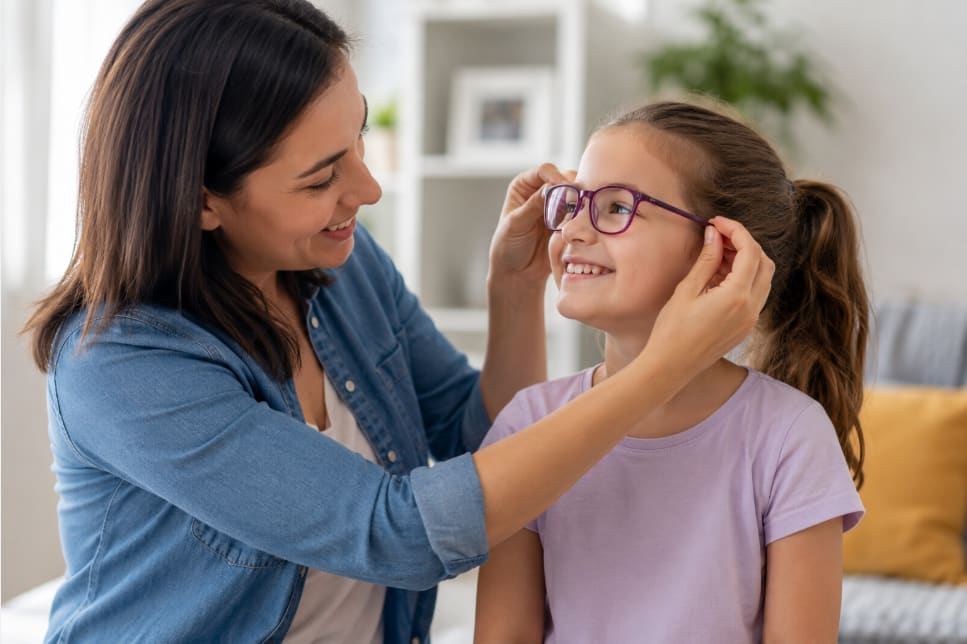
Before trying rewards, reminders, or any other strategy, make sure the glasses fit properly. A frame that slides down the nose, pinches at the temples, or sits unevenly on the face is genuinely uncomfortable – and a child who can’t articulate that discomfort will simply take the glasses off.
- Sliding: Bridge too wide, or nose pads need adjustment. The child keeps pushing the glasses back up.
- Pressure at the temples: The temples may be pressing in too tightly, or the curve behind the ear may be uncomfortable.
- Frame sitting unevenly: One side higher than the other – often due to natural facial asymmetry, fixable by an optician.
- General heaviness: Frame material or lens weight making the glasses feel burdensome, especially for younger children.
| Rule of thumb: If a child who was happily wearing their glasses suddenly starts resisting them, check fit before assuming it’s a behavioural issue. Frames can shift over time and may need re-adjustment. A visit to an optician takes a few minutes and is usually free. |
For a full fit checklist and troubleshooting guide: how kids’ glasses should fit?
Strategies by Age Group
What works with a 3-year old probably won’t work with a teenager. The table below gives a quick overview by age group – the sections that follow go into detail on each.
| Age Group | Main Reason for Resistance | What Tends to Help |
| Ages 1–4 | Sensory discomfort / reflex removal (not behavioural refusal) | Consistent routine, distraction, secure frame (cable temples/strap) |
| Ages 5–8 | Comfort, habit, early peer awareness | Positive reinforcement, letting child choose frame style |
| Ages 9–12 | Identity, appearance, peer perception | Frame choice autonomy, normalising glasses among peers |
| Ages 13+ | Identity, aesthetics, contact lens interest | Style-forward frame selection, open conversation about options |
Toddlers (Ages 1–4): Routine and Retention
At this stage, resistance is usually reflex, not behaviour. Toddlers aren’t making a decision to reject glasses – they’re responding to a new sensation on their face. The goal at this age isn’t persuasion; it’s building a habit through consistency.
| Priority at this age: retention, not explanation. Most toddlers aren’t at a stage where lengthy explanations are going to change their behavior. |
- Introduce glasses at a predictable moment. Put them on at the same time every morning, as part of the wake-up routine. Consistency reduces resistance over time more reliably than anything else.
- Use distraction immediately after putting glasses on. Hand the child something engaging – a favorite toy, food, a screen – the moment the glasses go on. The goal is to get past the initial removal reflex.
- Praise the wearing, not the glasses. “You’re wearing your glasses!” lands better than comments about how they look.
- Check retention design first (cable temples or strap harnesses), then fit. If glasses are coming off constantly, the frame design itself is often the issue – not the child.
| Clinical note – Norman Saffra MD FAAO: If a child is removing glasses in all settings – at home, at school, with grandparents – that’s worth looking into more closely, rather than assuming it’s just part of the adjustment phase. A followup visit to the eye care professional may be needed to re assess the prescription strength Consistency across every environment matters more than intensity in one. A child who wears glasses only at home will take much longer to adapt than one whose whole world expects them on. |
For frame features specifically designed for toddlers: eyewear for toddlers.
School Age (5–10): Positive Reinforcement and Choice
By this age, children know what glasses are and why they have them. Resistance is more about comfort, habit, or the first hints of caring what peers think – not a rejection of the glasses themselves.
A study published in Optometry and Vision Science surveyed parents of children aged 1–5 who wear glasses. The most frequently reported effective strategies were: being consistent in encouraging wear, using social modelling, providing positive reinforcement when glasses are worn, and ensuring the glasses fit well and are comfortable.
- Let the child have a say in the frame. Even within a limited set of appropriate options, children who feel ownership over their glasses are more likely to wear them. A frame they chose is harder to reject.
- Normalise, don’t lecture. Social modelling is quietly effective – mentioning casually when a character, athlete, or older sibling wears glasses does more than reminders. And keeping glasses in the same category as shoes and lunchbox (matter-of-fact, not optional) removes the daily negotiation entirely.
- Track wear time if needed. For some children, a visual chart showing how long they wore their glasses can be an effective motivator. Keep it positive – it’s a record of success, not a punishment tracker.
A small thing that makes a bigger difference than it sounds: when a child sees a character in a book or a favourite athlete wearing glasses and you mention it casually – not as a lesson, just as an observation – it quietly normalises the whole thing. It doesn’t need to be a big moment.
Tweens and Teenagers (11+): Autonomy and Honesty
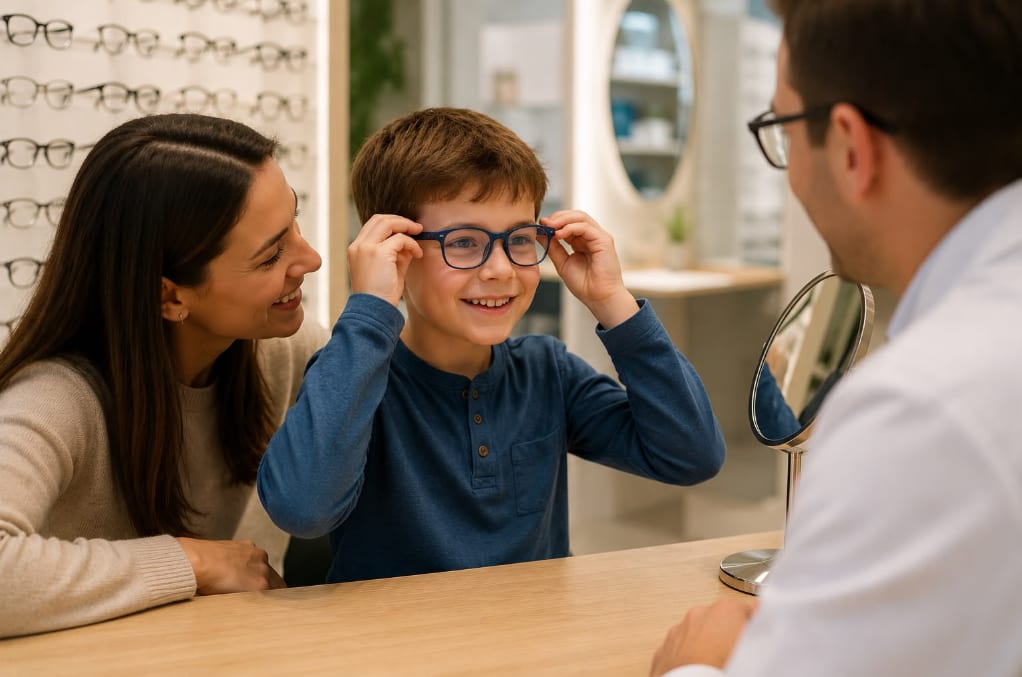
At this age, glasses resistance is rarely about vision – it’s about identity. A teenager who feels their glasses don’t fit who they are will find ways not to wear them, regardless of how clearly they see. What works is making the glasses genuinely theirs – in style, in choice, in ownership.
- Make frame selection genuinely their choice. Within the parameters that work for the prescription and face shape, let them pick frames they actually like. Aesthetics matter at this age and that’s legitimate.
- Have an honest conversation about contact lenses. Many teenagers can be appropriate candidates for contact lenses. If glasses resistance is strong and persistent, discussing this option with the eye care provider is worth doing – rather than continuing a battle that isn’t necessary.
- Connect glasses to the things they care about. Seeing clearly matters for sport, driving, reading, screens. Framing glasses in terms of what they enable – rather than what they correct – tends to land better at this age.
- Keep the lines open. For some teenagers, wearing glasses inconsistently for a period is part of the process. Keep the conversation going, raise concerns with the prescribing doctor if needed, and try not to let glasses become the main point of friction in the relationship.
| Worth knowing: If a teenager’s resistance is mainly about appearance, take a fresh look at the frames themselves. Sometimes the issue isn’t glasses – it’s that the frames don’t feel like something they’d choose to wear around their friends. |
When to Go Back to the Prescribing Doctor
Most resistance is manageable with the strategies above. But if a child is also complaining about blurry vision, headaches, or that things look weird with glasses on, it’s worth thinking beyond behaviour and checking whether something else is going on.
A few situations specifically warrant a conversation with the eye care provider:
- Persistent complaints that vision is blurry or ‘weird’ with the glasses on. This can indicate the prescription needs reviewing, and it’s not just an adjustment period.
- Resistance that develops suddenly after a period of normal wear. A significant change in behaviour around glasses can sometimes indicate that something has changed, making it worth a review.
- Headaches or eye strain after wearing. This may mean a fit issue, a prescription issue, or a problem with how the lenses have been positioned – worth checking rather than assuming it’s normal.
- Glasses that are part of a treatment plan. For children whose glasses are prescribed as part of treatment for an eye condition, consistent wear is particularly important – and any compliance difficulties should be discussed with the treating doctor directly.
FAQ’s
My toddler keeps pulling their glasses off. Is this normal?
Young children often pull their glasses off simply because it’s a new sensation, not because they don’t need them or don’t want to wear them. Consistency, distraction, and retention-friendly frames (cable temples, strap harnesses) are the most reliable tools. Most children adapt within a few weeks to a few months with consistent encouragement.
Should I force my child to wear their glasses?
“Force” rarely produces lasting compliance and tends to create conflict around glasses that persists. A more helpful way to think about it is: glasses are a non-negotiable part of the daily routine, like teeth brushing, but the approach is calm and matter-of-fact rather than confrontational. For very young children especially, distraction and routine work better than insistence. Follow the guidance of your eyecare professional
My child wears their glasses at school but takes them off at home. Should I be concerned?
Not necessarily. It’s worth thinking about what your child is doing at home. If most of their time is spent reading, using a tablet, or doing other close-up activities, they may feel less need for their glasses than they do at school. This is an appropriate question for your eyecare professional regarding your child’s specific case.
At what age can my child switch to contact lenses?
There’s no fixed minimum age – the more relevant factors are maturity and the ability to care for lenses responsibly. This is a conversation to have with the prescribing eye care provider, who can advise based on the specific prescription and the child’s situation.
The goal isn’t getting your child to tolerate glasses – it’s helping them get comfortable enough that wearing them becomes part of everyday life. Fit, material, and giving them a genuine say in the style are the three things that make the biggest difference.
| Disclaimer: This article is for informational purposes only and is not medical advice. The information presented is general in nature and may not apply to your individual circumstances. Consult a licensed eye care professional for personalized recommendations. Never disregard or delay professional medical advice based on this article. GlassesUSA makes no warranties regarding the information presented. Reliance is at your own risk. The eye care professional featured in this article is a paid spokesperson for GlassesUSA. |
Published July 13, 2026|Updated August 16, 2026
